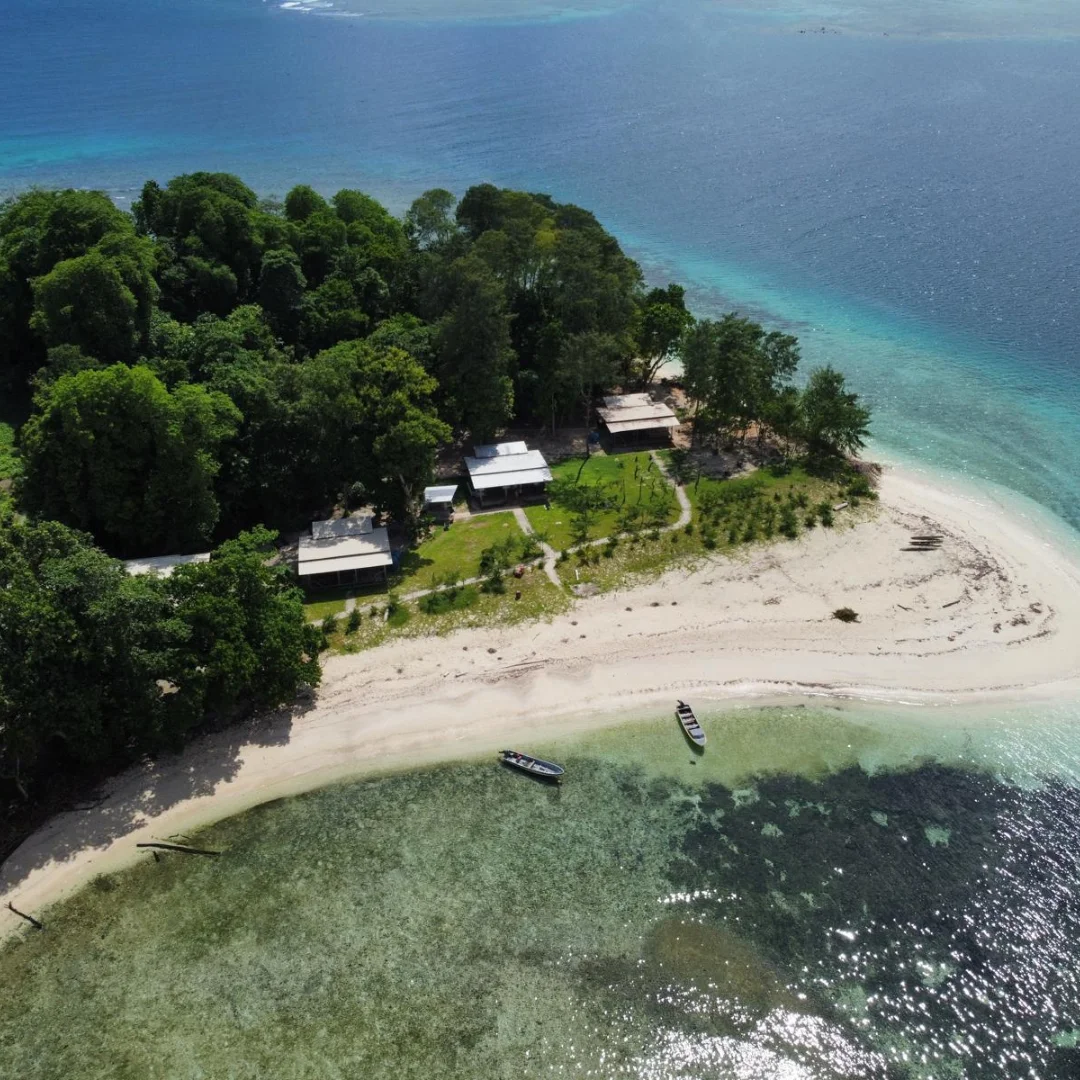
Indonesia and the Pacific are the practice's tropical territory. Two regional architectures, separated by ocean and culture, sharing one quiet pleasure: the doors fold back, the breeze finds you, and for most of the year the line between the room and the garden simply stops mattering. Get this wrong in the wet tropics and the building works for half the year. Get it right and it works year-round, the way the vernacular always did.
Atelier Terra has built work in the Solomon Islands and currently holds hospitality and residential commissions in Indonesia. Active interest extends across Bali, Lombok, the wider Indonesian archipelago, and the Pacific island groups Australia trades with. Tropical work is serviced through extended site visits, supported by a documentation partner with international project capability.
What tropical sites demand.
The first discipline is climate. Cross-ventilation is non-negotiable. It is the primary cooling strategy. Roof forms have to shed monsoon rainfall and earn their hold against tropical wind. Eaves have to be deep enough for the angle of the sun and generous enough to protect openings during wind-driven rain. The plan has to allow the building to open completely when the breeze arrives and close down completely when it doesn't. Mechanical cooling is a back-up, not a starting point.
The second is material. Material specification is decided long before the documentation begins. Hardwood species selected for the climate. Marine-grade fixings throughout. Timber, stone and rendered surfaces detailed for humidity and biological load. Roof and gutter sized for tropical rainfall, not subtropical norms. The wrong material in the wet tropics is a maintenance liability inside five years; the right material is a fifty-year asset. The discipline is non-negotiable.
The third is regional response. The architectures of Bali, the eastern islands, the Solomons and the wider tropical Pacific are not interchangeable. Roof, threshold, planting, water and the relationship of the building to its site work differently in each place. The practice approaches every tropical commission with that distinction in mind. Direct exposure to Bali, Lombok and the Indonesian archipelago, alongside built work in the Solomon Islands, sits behind every tropical proposal.
How Atelier Terra works at distance.
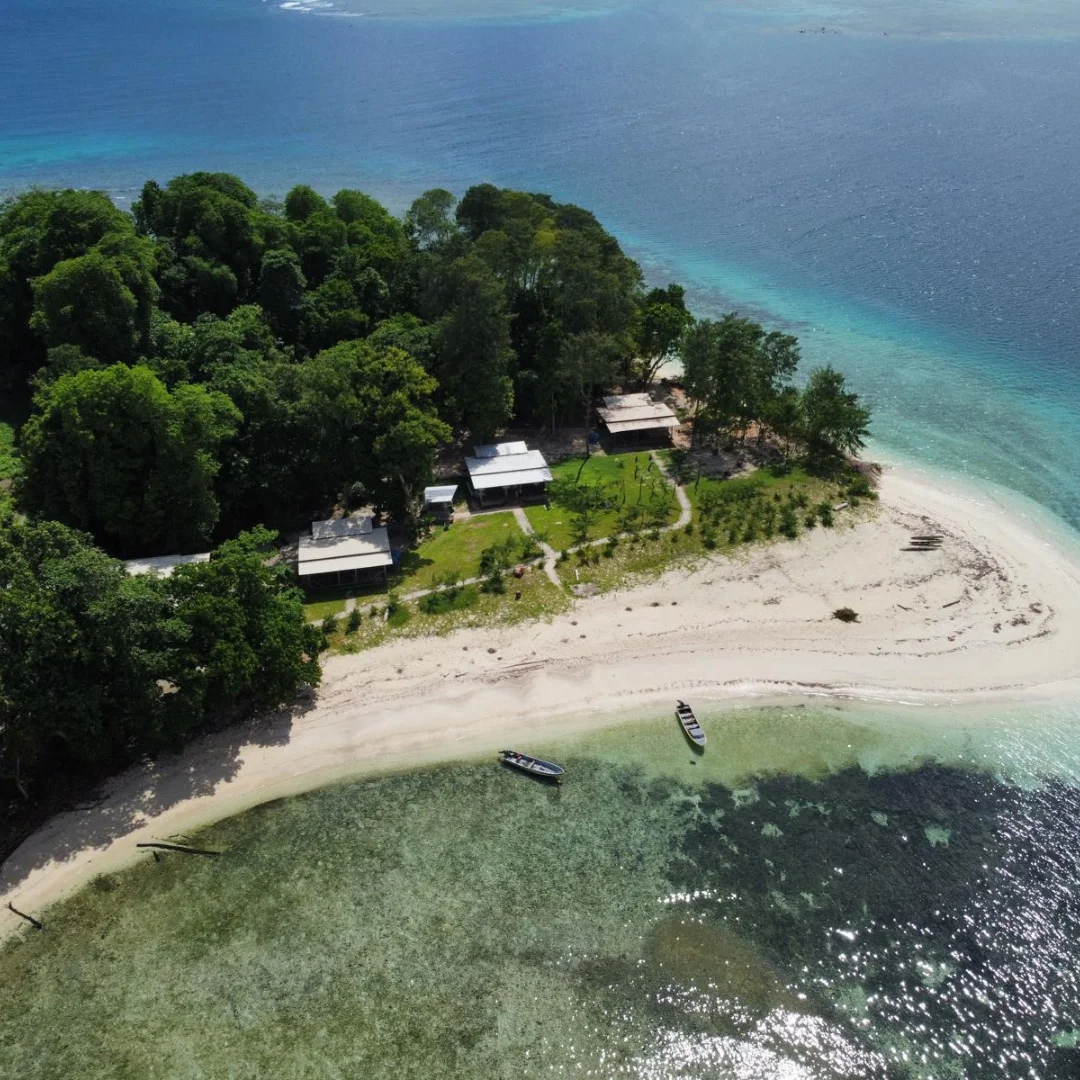
Tropical commissions are serviced through extended site visits at meaningful intervals, scoped to the project rather than the calendar. The wet season changes the site. The dry season changes the site. Designing for one without understanding the other produces buildings that work for half the year. Where local consultants are required for survey, soils, statutory and construction-phase support, the practice engages and coordinates them as part of the commission.
Documentation and delivery is handled through 3iD Architecture, the practice's documentation partner, with experience working on projects in remote and international jurisdictions. Design leadership and material direction remain entirely with Atelier Terra.
What Atelier Terra builds here.
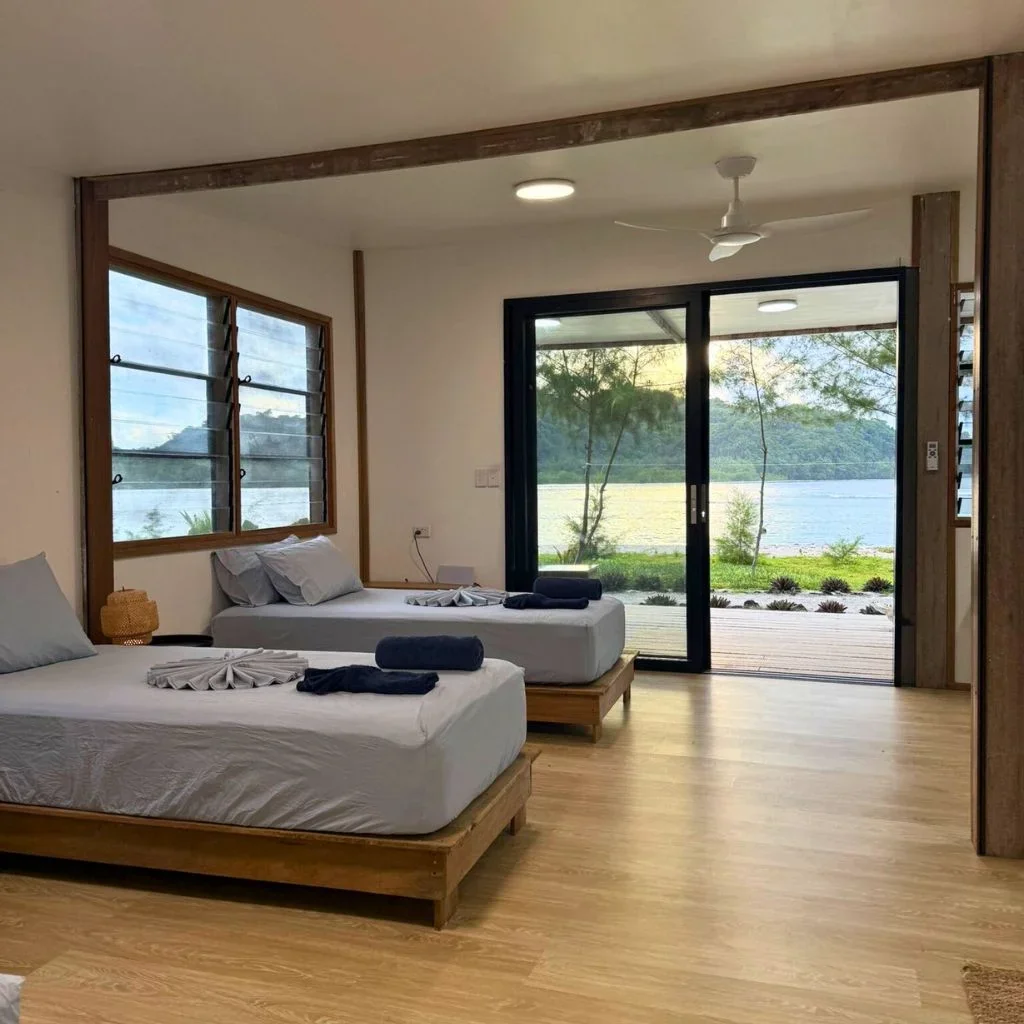
Resort and short-stay properties on tropical sites where the architecture itself, its light, its breeze, its material quality, is the experience offered. New residences for owners building or rebuilding in the tropics. Hospitality renewal where existing properties have aged out of contemporary expectation. Built work includes Nu Finia Resort in the Solomon Islands; current commissions include hospitality and residential projects in Indonesia.
Tropical commissions are accepted on a selective basis. The first conversation establishes whether the site, the brief and the timeline support the kind of work the practice takes on.